
Head-on Confrontation Between Nikon D60 and Panasonic Lumix FZ28 (Part 2)
“Are you saying a compact camera is comparable to a DSLR?” No no no! I beg your pardon. I have never said that and it will never, for the time being, at least, in terms of picture quality. A compact camera can never excel in picture quality over an even cheapest DSLR in the market due to the key element in camera, the Image Sensor. Unless a compact camera is using a DSLR sized sensor, but then again it’s no longer compact! Talking about overall performance which shall include wider aspects than image quality alone, both excel in certain area than the other, and that’s the reason (more reasons) why I writing this post now. While inserting similar captures from both Nikon D60 and Panasonic Lumix FZ28, I listed out also differences of both camera in terms of functionality, picture quality and also flexibility where either camera edges out the other in each of the department. Interested buyers could easily notice the difference between a DSLR and a compact’s as below:
- Why a DSLR is always larger and bulkier than a compact camera or the other way round? It’s all depends on the construction and key elements in a camera. Panasonic Lumix FZ28 is more compact than Nikon D60 even though it has an ultra zoom capability of 18x or 486mm in 35mm film format equivalent, because it has a much smaller image sensor. It’s 1/2.33 sensor requires a much smaller diameter of lense and consequently shorter focus length. Its total length when being extended fully is even shorter than D60 with lense being retracted fully! It is the reasons that FZ28 could focus on object 10mm away while D60 needs at least 200mm to be able to focus! This is the advantage of FZ28 in terms of travel flexibility;
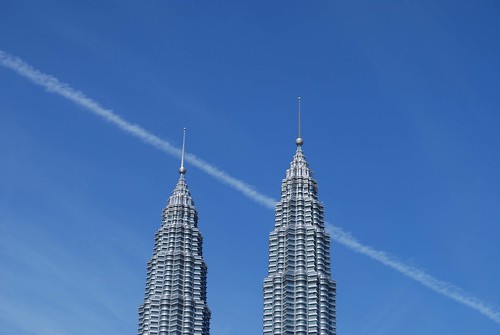
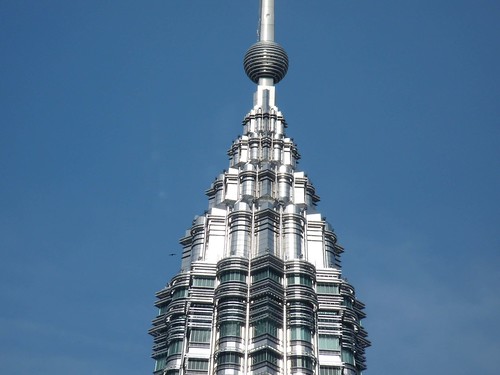
- Comparing kit to kit (since we are comparing 2 similar price-ranged cameras with kit lense included), FZ28 has a stunning 27 x 486mm zoom lense while D60’s kit lense could only be zoomed from 27mm to 83mm in standard 35mm format equivalent. Lumix FZ28 edges out D60 again on zooming-in capability and composing flexibility;
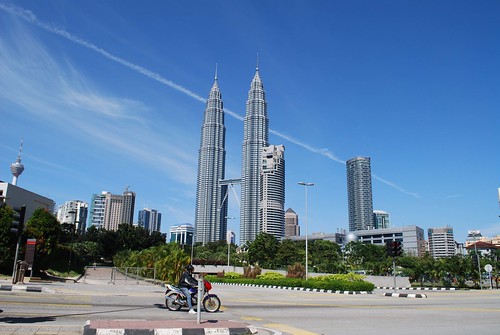
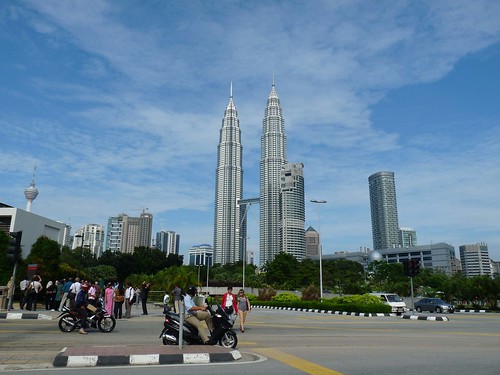
- In the image quality department, I have inserted few pairs of similar photos captured with both cameras. let’s compare top and bottom (or easier side by side if you read this post with RSS reader). Photo by D60 is always followed by FZ28, or if you have noticed, aspect ratio of D60 is slightly different from FZ28: while both cameras’ sensor contain 10 million pixels, D60’s resolution is 3872 by 2592 and FZ28 is 3648 by 2736. Generally, D60 produced a brighter, more contraty, more saturated and most importantly (to me) more lively image straight out of the camera (off course post proccessing could even out the differences, at least close if not identical);
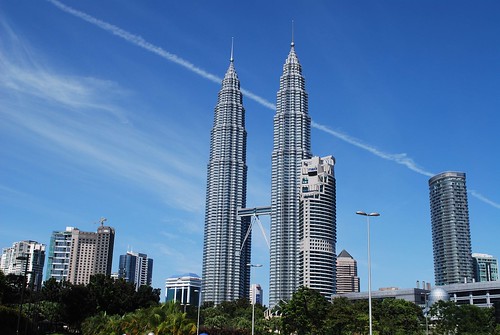
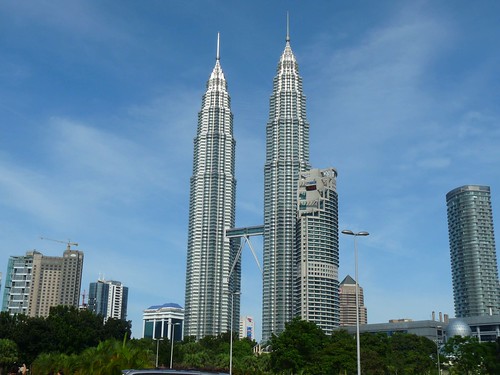
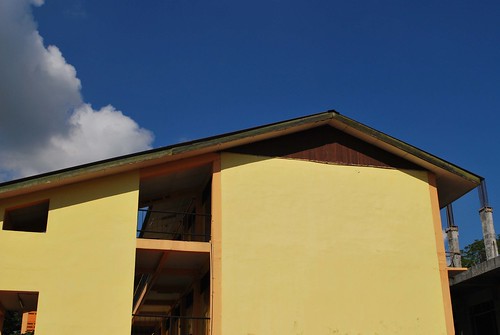
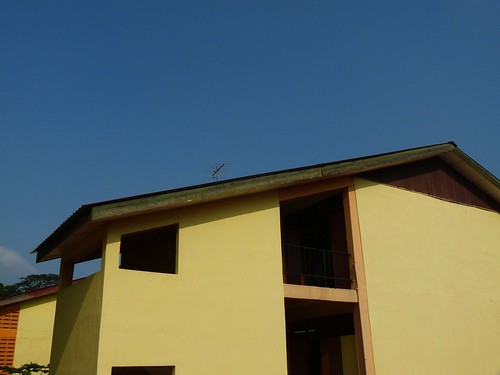
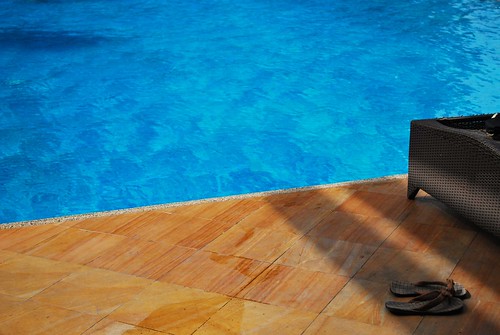

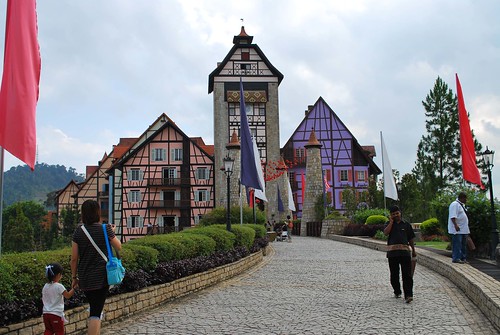
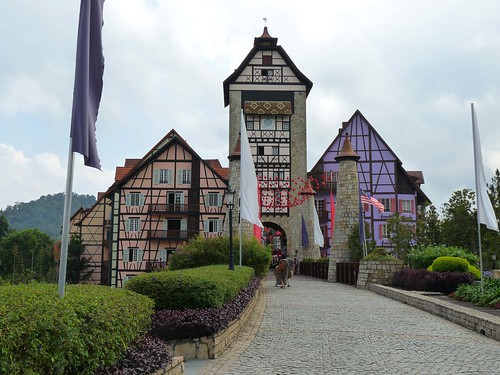
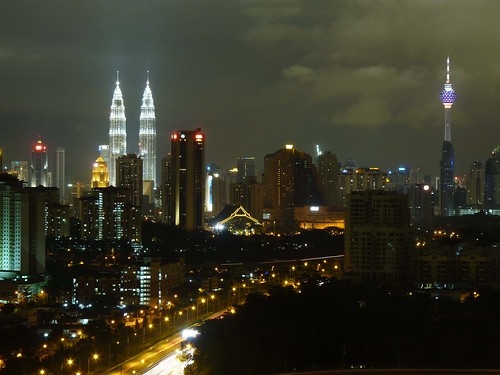
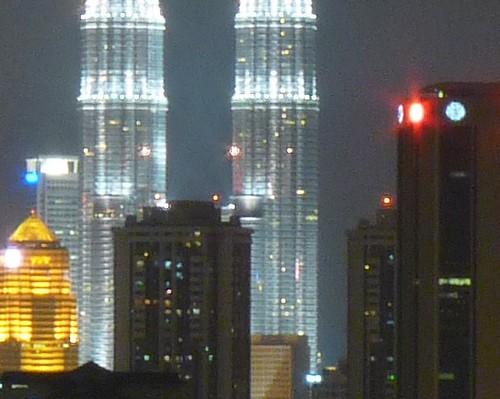
- For the same amount of pixels within a very much different sized image sensor, logically, D60’s image produced is slightly sharper and cleaner with neater edges, though it could only be noticed in larger photo printout size. Looking at 100% crop of 2 similar night scene images, again, with the nature of smaller sensor size, FZ28 inevitably produced some image noise even though with lowest ISO setting of 100;
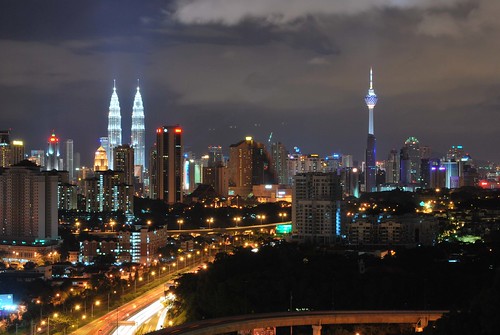

- Another important feature of a modern digital camera or lense, is image stabilizing. O.I.S. or Optical Image Stabilizer of Panasonic shows tremendous performance in stabilizing shaky hands. Though D60’s kit lense 18-55mm VR has the same function of stabilizing or vibration reduction, VR hasn’t shown as significant improvement over non-VR lense as FZ28 has. Moreover, Lumix FZ28 could freeze hand shake for 1 whole second!
- Handling is another strength of Panasonic Lumix FZ28. Its proprietary Joystick quick menu button is so well located just able to free up your left hand and take photos and adjusting most important shooting options with just one single hand!! Nevertheless, D60’s extra weight as a DSLR should not be hold single-handed anyway;
- Dynamic range. DSLR is always better in terms of dynamic reproduction, no argument. Look at the photos below. Other than just white and black, there are also light grey and dark grey. D60 manged to reproduce it well and looks more natural, while FZ28 failed to reproduce such a dynamic range;
- Colours rendering. Both cameras produces natural colour in their images. However, Nikon D60 (even D90) produces slightly more saturated reds and blues in their image while Lumix FZ28’s colour rendering is more balance through out the spectrum. No issue here, up to personal preference;


- Bokeh effect. Nikon D60 wins hand-down. Perhaps due to a larger lense diameter, focus point of D60 is more precise eventhough with a larger F number or smaller apperture. Few inches in front or behind it would easily appeared blur and effectively better Bokeh effect. This is an important and preferred effect when shooting portraits or close-up. The main object will stand out easily!




- Close-up photography. Both cameras exhibit similar capability. However, FZ28 has an extra advantage of longer zoom where I can shoot a spider without pointing the camera too close to it!


- Live view. Panasonic Lumix FZ28 wins on some extra features that D60 or even D80 (only the latest D90 has all those features but triple the price of FZ28!) lacks. Live view shooting is so common or even a must for compact camera due to the different mechanism. But having the same feature in DSLR is something exotic. Not even D90 could have live view shooting as fast as a compact camera!
- D60 also lacks the capability of recording video. FZ28 wins hands-down with the HD video recording feature! and
- Other than the above, FZ28 has more features on offer. Exposure Bracketting and colour bracketting are very useful features found in FZ28 but not D60.
These are some of the advantages and disadvantages of both Nikon D60 and Panasonic Lumix FZ28 that I’m owning until today. Neither of them won straight away to let me keep the other at home. Both are great and light cameras to be carried along on my vacation travel. The bottom line is all depending on one personal preference and taste. Those who ask you to buy this over the other are only their preference, not the performance of these cameras. Read more of the post and compare photos side by side in RSS feed reader. – Travel Feeder.

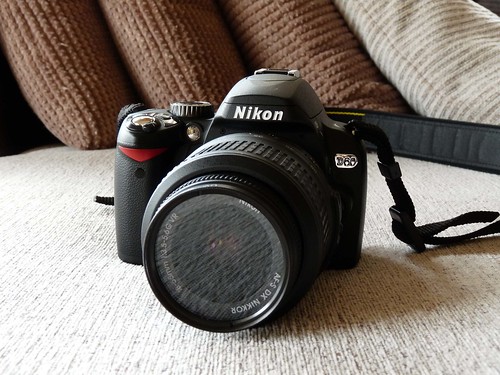
Nikon D60

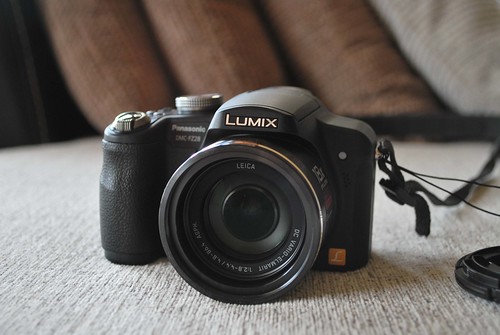
Panasonic Lumix FZ28
About The Author

Cecil Lee
The author is an avid traveler and photography hobbyist who loves to share with others his travel and photo-taking experience in many popular tourist destinations around Europe, Asia and Australasia. Read the exciting stories with many photos captured on his journeys.




I like D60 pictures better. 🙂
- February 25, 2009Nice reviews.
Now I know why DSLR need like 20cm to shot a close up picture.
aiyo!! ur girl is really cute!!! feel like pinching her chubby cheeks!! post more pics of her!! hehe
- February 28, 2009Wow, you’ve really worked with this comparison. Interesting to see the differences. I agree with you there, it’s personal preferences or what features that’s most imoprtant to you that’s gonna make the choice.
Lifecruisers last blog post..High Hike Mad Lad in Spain
- March 6, 2009>Lifecruiser,
- March 7, 2009End of the day, you would be the one keeps your photos for future memory recap. So just pick a camera that can produce images of your personal liking…. 🙂
I think the colour difference with the two cameras is quite startling – the Lumix looks more washed-out to me, especially in some more difficult environments such as night time.
Mark Hs last blog post..The Seventeenth Century Titanic (Stockholm, Sweden)
- March 11, 2009>Mark,
- March 12, 2009Yeah, Bingo! You’ve got it right Mark. “Washed-out’ is the word to describe the Panasonic’s colour characteristics. 🙂
Perhaps with the limitation of its smaller sensor, more noise reduction process has been applied onto the pictures…
Nice post, it’s nice to see people that write on their blogs with care. Greetings from Italy, i’m here for travel in an hotel in milano marittima
- April 29, 2009Wait a sec, the photo of the D60 shows a skylight filter. Did the FZ28 also have one? If not, were most of your photos taken with D60 and a skylight filter? If yes then it’s not a fair test for color rendition on any outdoor photo right?
- June 9, 2009>Inayat,
- June 10, 2009You have sharp eyes! Yes and no. Yes, D60 has a filter on. No, it’s not a skylight but UV filter. It doesn’t really affect the colour rendition on outdoor photos. In fact both D60 and FZ28 have UV filter on all the time, what happened was I took it off from FZ28 when I took the photo… 🙂
That was a great post…I love this site…Thanks
- June 12, 2009I like your blog
- August 27, 2009There is obviously a lot to know about this. I think you made some good points in Features also.
- September 10, 2009Thanks u for the post , i like it , is very very very great 🙂 http://nipastudio.com/
- October 7, 2009Hi,Cecil,i have enjoyed your comparison tests on the FZ28 and D60,there’s nothing like using cameras in day to day use that brings out the strengths and weaknesses in the various types of cameras.I too use the FZ28 as my preferred camera,and i have found that to truly discover the magic that the lens can deliver,one must shoot in Raw,and use the SilkyPix software that is bundled with the camera.When you open an image in the software it does a initial quick pass over the image,magically removing the noise (very satisfying to watch).Anyone who owns this camera will never know what great JPegs it will produce if they let the camera produce them,instead of downloading them in the Raw format and convert in supplied software.I gave up a Canon 400D to use this camera because i got sick of carrying around a big bag of lenses,i also have the FZ20,and a FT1Lumix,which is coming on Monday,for underwater shots.Once again Cecil,i enjoyed you comparison article,well done,hope my raw tip is useful,cheers,Lance.
- December 11, 2009@Lance,
- December 11, 2009Thank you so much! Finally we have someone could suggest great tips to produce better (though it’s already great) photos from Panasonic Lumix FZ28. I should try shooting RAW next time. Cheers!
comparison was realy great but thers a small query . .
- December 13, 2009which photos are clicked by which camera . .
means if we stare from upperseide the photo which comes 1st are which one clicked by d60 or fz28 ? pls tell me i know its silly que.
I like the most photo which are 1st in order of two similer photo.
so which camera did i liked
My sister loves capturing emotions, she enjoys photography and so I presented her the one you mentioned on her birthday, after reading the review you posted. She truly loved the present I must thank you for helping me choose the apt cam for her. It is certainly wonderful with the finest features. Now even I have started to enjoy capturing.
- November 8, 2010wooo I was just planning to buy a new camera, though I already have three handy, this was for my cousin’s wedding, and now after reading your wonderful comparison I know what to buy now. Keep up the good work. I am glad I viewed this before actually buying it.
- November 11, 2010Although this post is quite “old” already i must say it is still relevant even today in 2014.
I owned the FZ28 now for 5 years and it did a brilliant job.
However, i touched the borders when it comes to making more creative pictures, mainly because of the high depth of field and the lack to being able to get that great blurry backgrounds in portraits, due to the small sensor.
So the conclusion was to buy a DSLR as the camera of choice whenever doing portraits or creative shots.
- August 8, 2014But the FZ28 will still be my preference when travelling or hiking, as it gives me the chance to catch wild deer in the mountains, which i would miss if i had to put on the heavy and large tele lense on the DSLR first.